
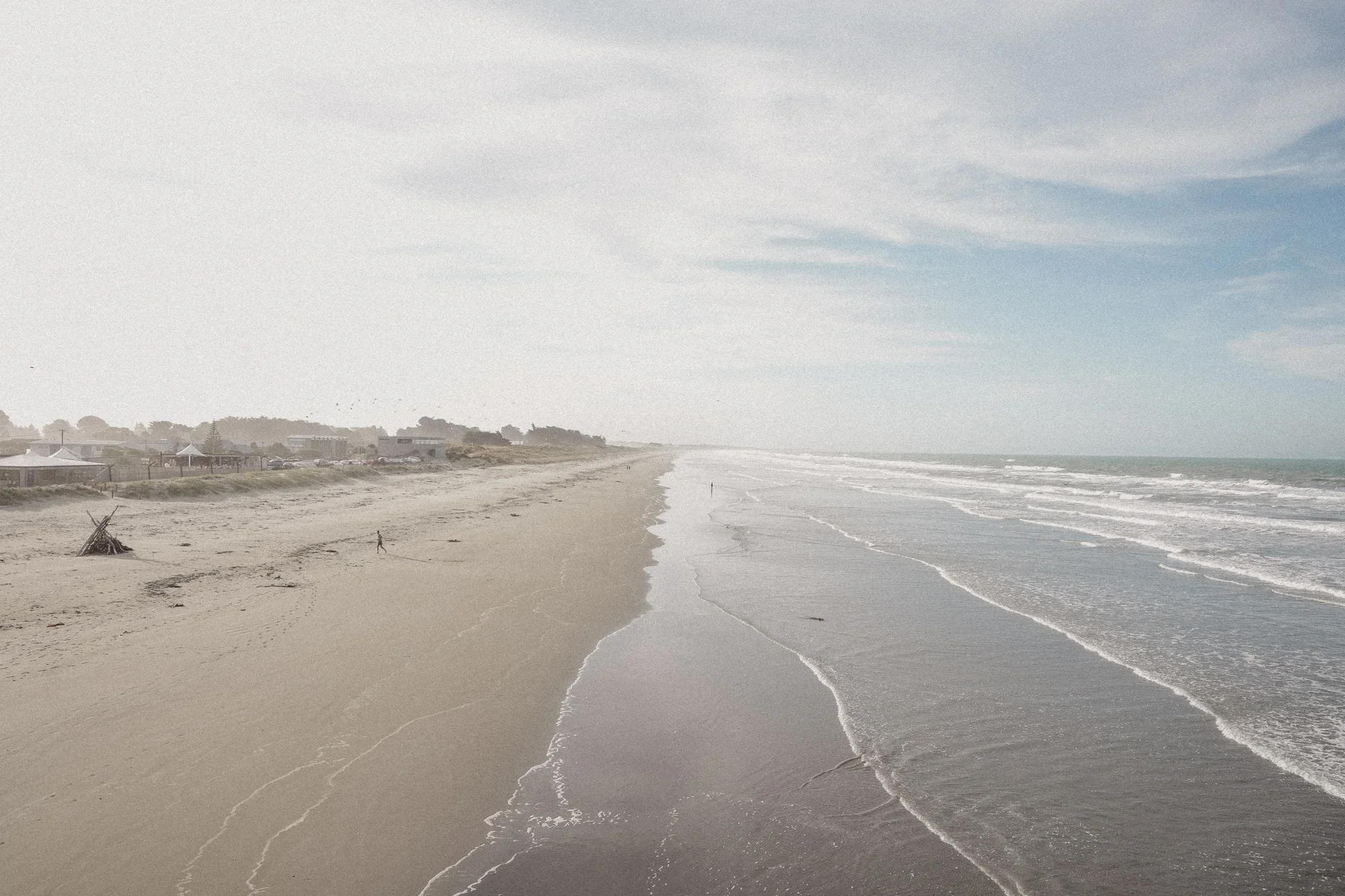
New Beginnings
150 Years of History - Discover The Opportunity
It’s hard to find another suburb in New Zealand that’s had a ride as wild as New Brighton. It’s past has three distinct era’s, each reshaping the centre through intended and unintended consequences…
Foundations and Flourish
1850–1946
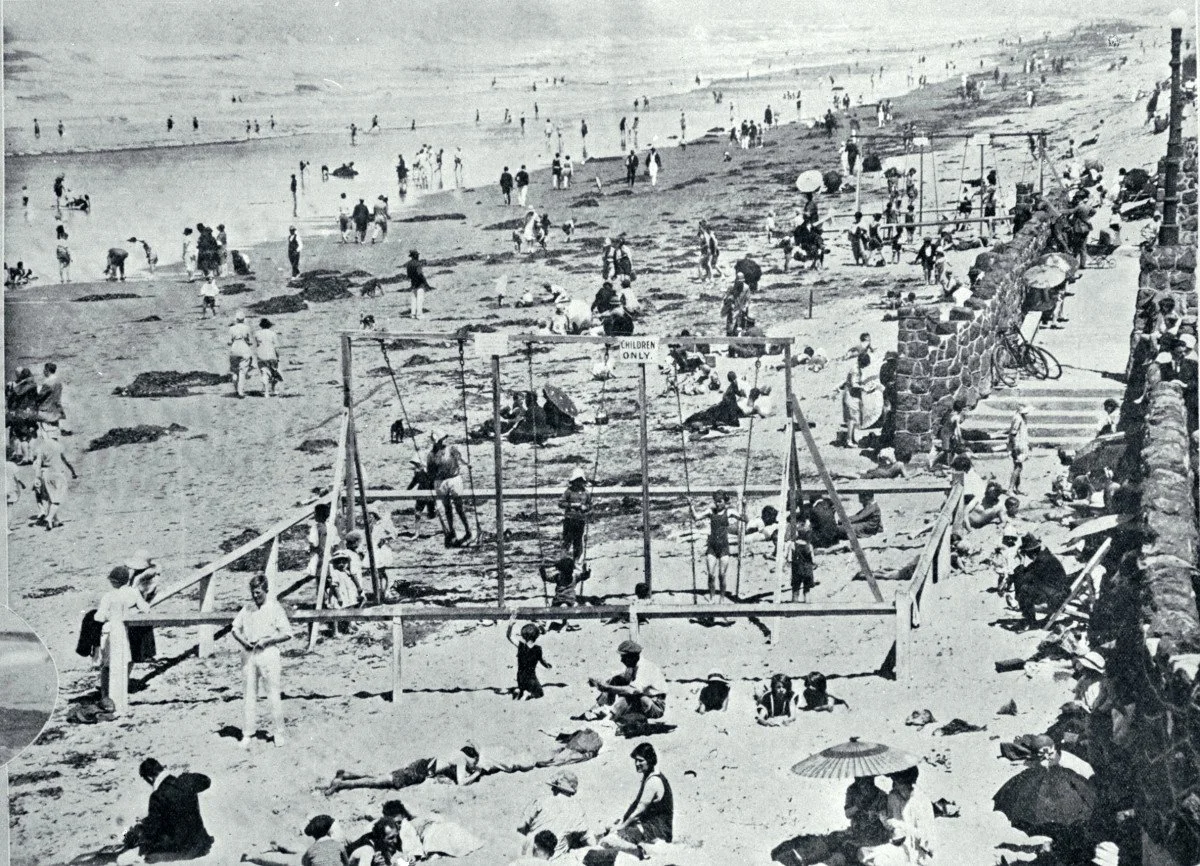
From the earliest days of European settlement, New Brighton offered something the rest of Christchurch couldn’t: space to breathe, sea air, and a sense of escape. In the 1850s and 60s it was little more than dunes and scrubland. A name — borrowed from its English counterpart — was chalked on a board, it caught on, and New Brighton was born.
With no proper road, it began life as a remote coastal outpost of simple cottages and baches, attracting a few hardy settlers and adventurous day-trippers who made the long trek from Christchurch to camp along the shore in warmer months. The arrival of a horse-drawn tramline in the 1880s changed everything. What had been a distant outpost became the city’s favourite day trip. Families crowded onto trams bound for the sea, towels and picnic baskets in hand. Weekends were spent paddling in the shallows, queuing for donkey rides, and strolling along the first pier, built in 1894. Shops soon lined Seaview Road, forming the spine of what would become the commercial heart.
In 1906, the electric tram made New Brighton even more accessible, fuelling another wave of growth. By the early 20th century, it was home to thousands of residents and one of Christchurch’s premier attractions. The commercial centre blended everyday essentials for locals — general stores, grocers, barbers, tailors, drapers — with dining rooms, tearooms, and amusements for the holiday crowds.
While both Sumner and New Brighton began with clusters of houses near the sand, geography set them on different paths. Sumner, hemmed in by steep hills and the coastline, ran out of buildable land early. This scarcity drove property values up, attracting a more established and older population over time. New Brighton, by contrast, had vast flat expanses stretching inland from the dunes and estuary, allowing it to sprawl and remain more affordable for longer. That affordability drew younger families and a more transient mix of residents, fuelling a vibrant, high-energy seaside culture. Combined with its growing commercial centre and attractions, New Brighton became the city’s bold, bustling beach — in contrast to Sumner’s smaller, boutique charm.
For the next four decades, growth in goods, services, and recreation moved hand-in-hand. The pier, hot salt-water baths, two cinemas, playgrounds, and clubs kept the town buzzing year-round. Surf carnivals, beach sports, galas, parades, and concerts drew crowds from across the city. By the mid-20th century, New Brighton was unquestionably one of Christchurch’s favourite public places — a deeply loved seaside retreat where residents and visitors mixed in a self-sustaining, vibrant centre.
But in 1946, nearly 100 years after the first home was built, a new era was about to begin — one that would change everything.
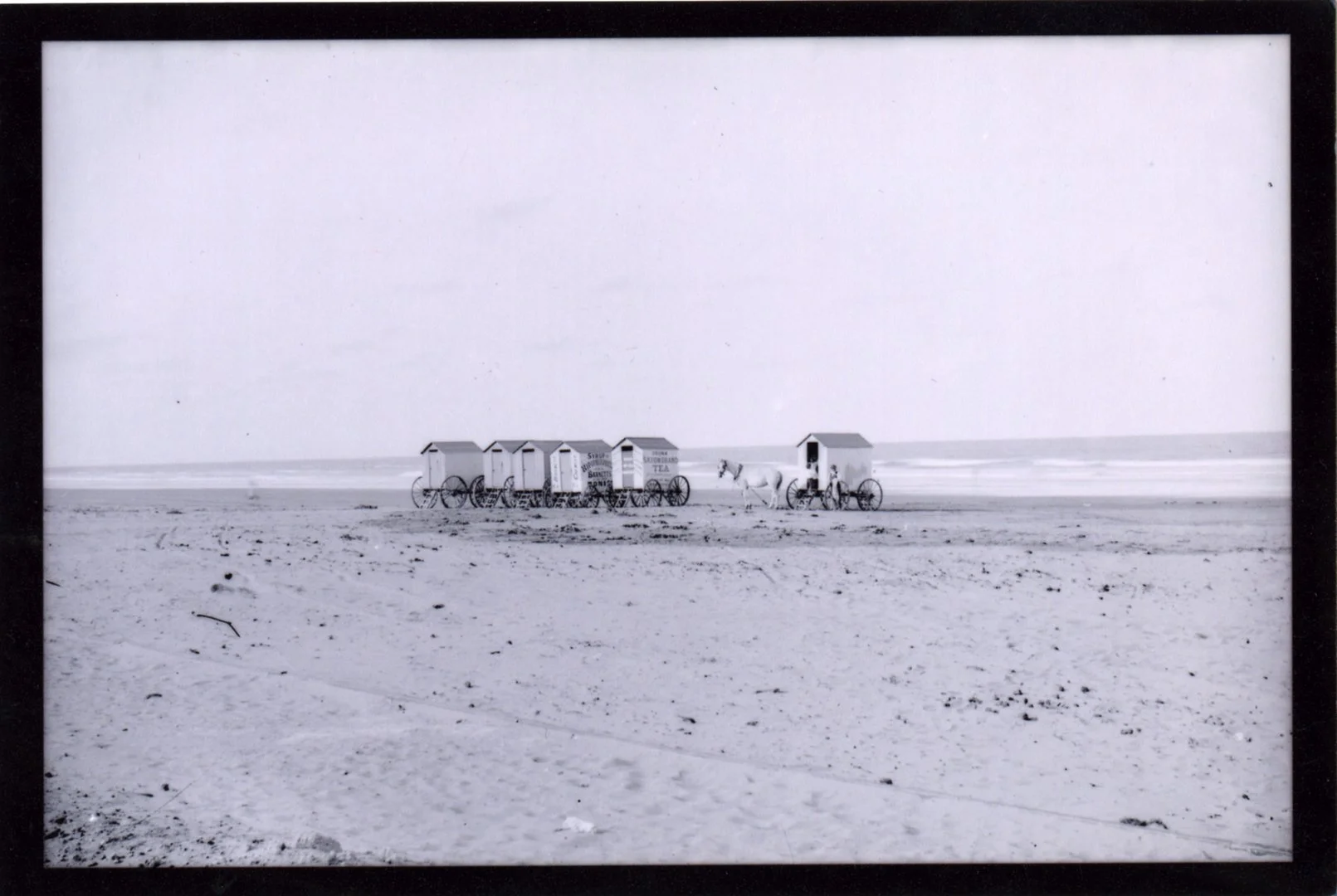
Effey's Baths were the first facilities in New Brighton in the 1890's. A set of horse drawn bathing machines and enclosed bath houses.
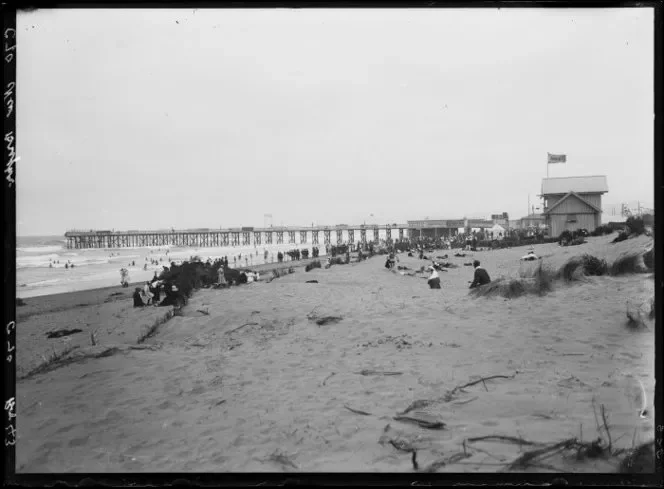
The First New Brighton Pier shortly after officially opening in 1894.
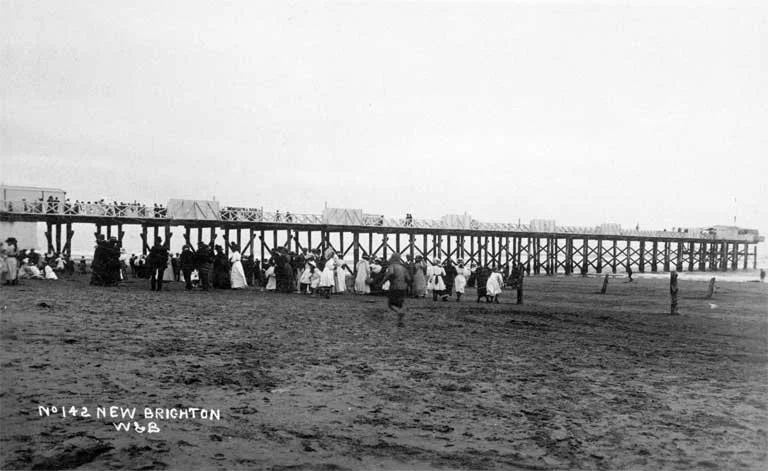
Pier - 1920. Festivities have already begun.
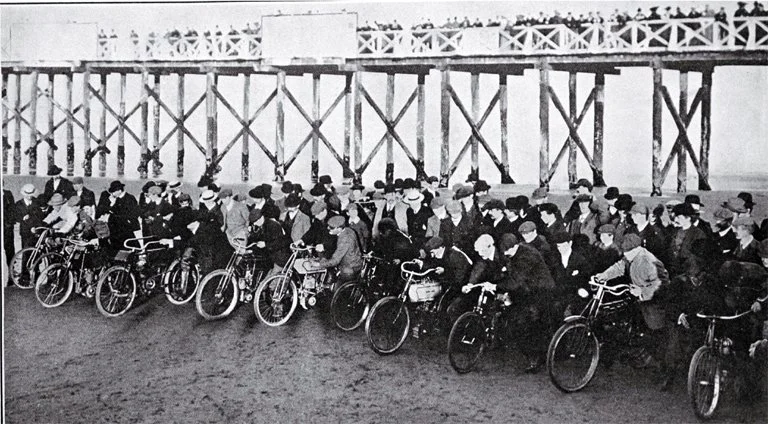
1905 - Event's begin to diversify, with motor races on the beach.
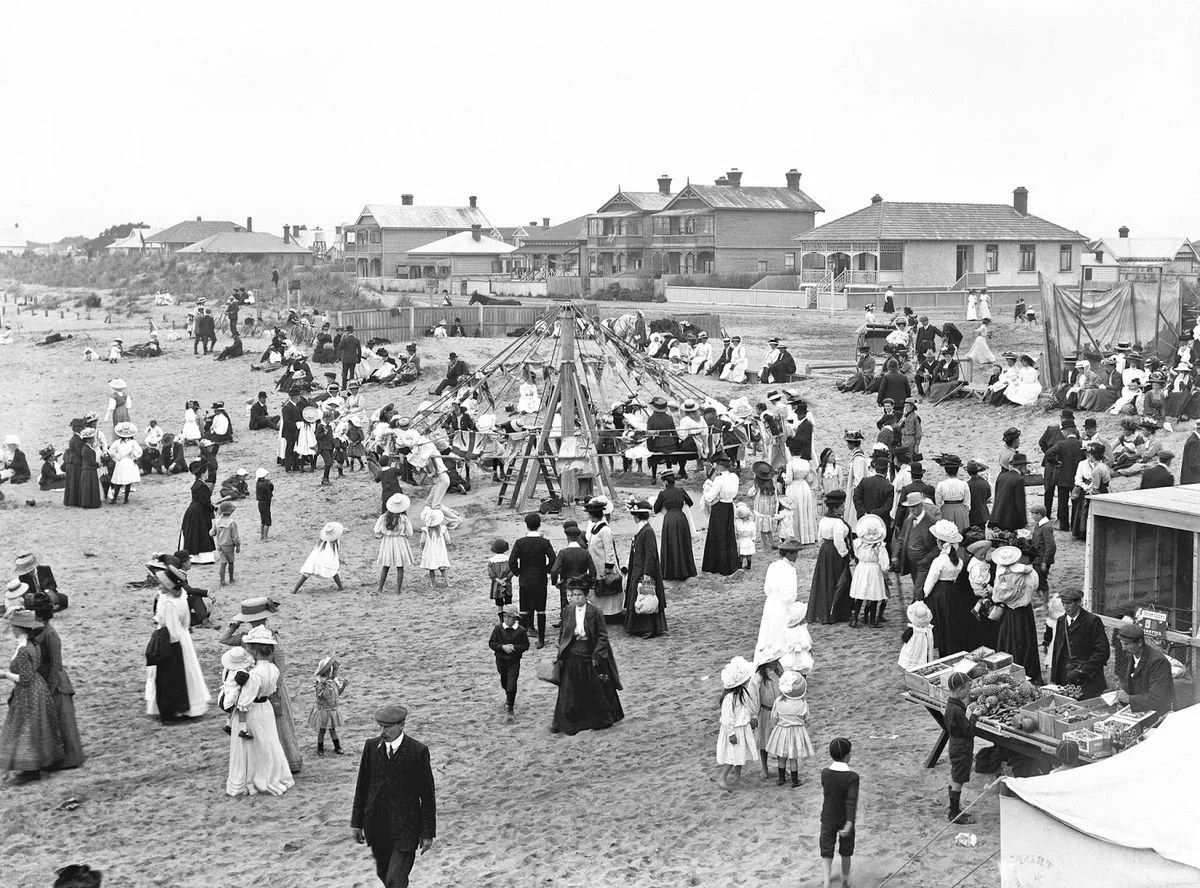
A busy beach in 1910 with the formal attire of time.
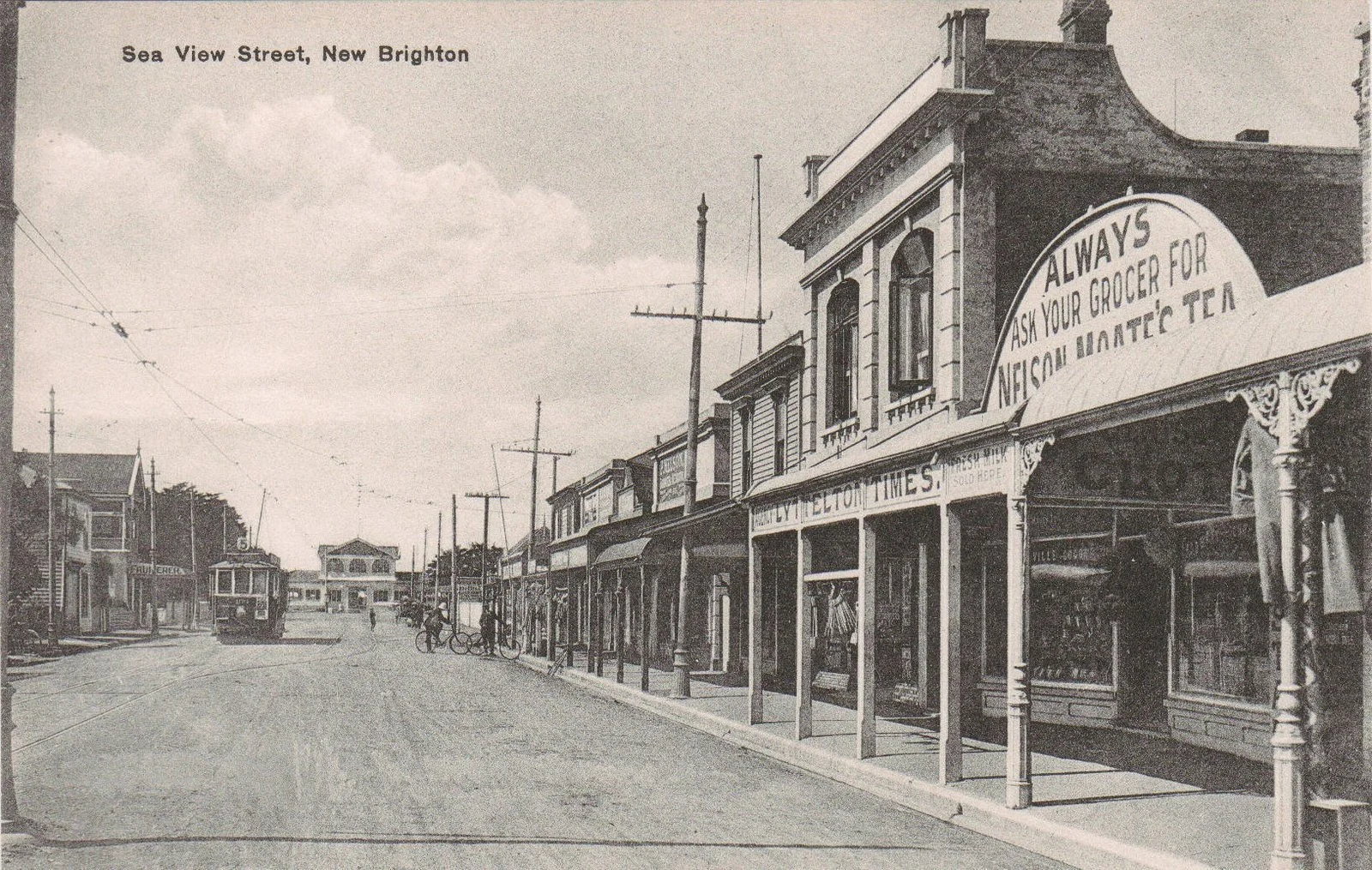
Sea View Road in 1910, an expanding into a vibrant commercial centre for locals and visitors. The tram line still pulled by horse increased accessibility and fueled growth.
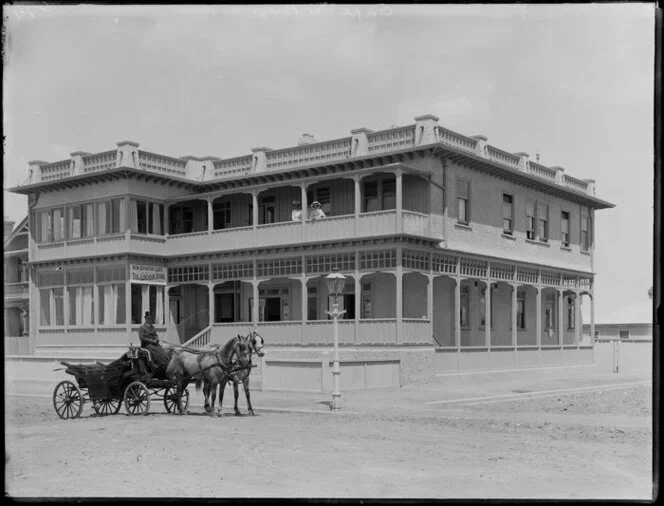
The New Brighton Cafe in 1910. The striking two-storey establishment stands proudly overlooking the ocean on Marine Parade near the Pier setting the scene for a high standard of holidaying.
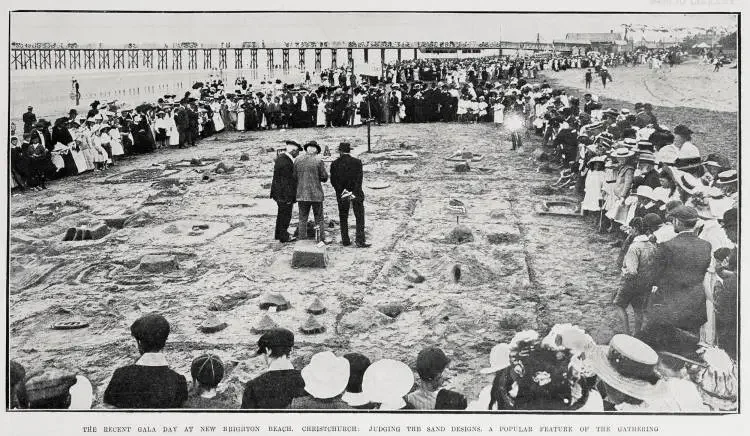
Crowds flocked from across the city on Gala Day in 1910. Judges assessing the sand design competition.
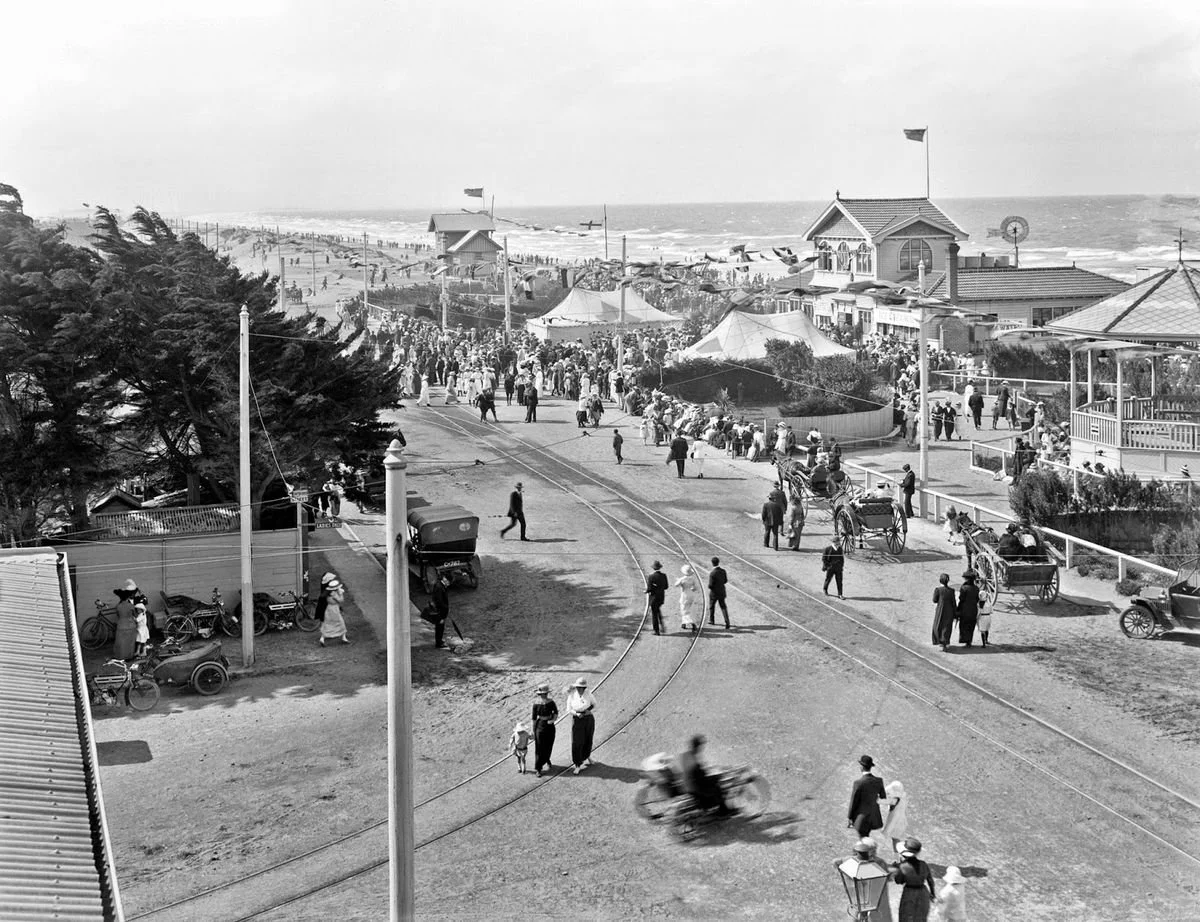
The ever popular Gala Day 1915
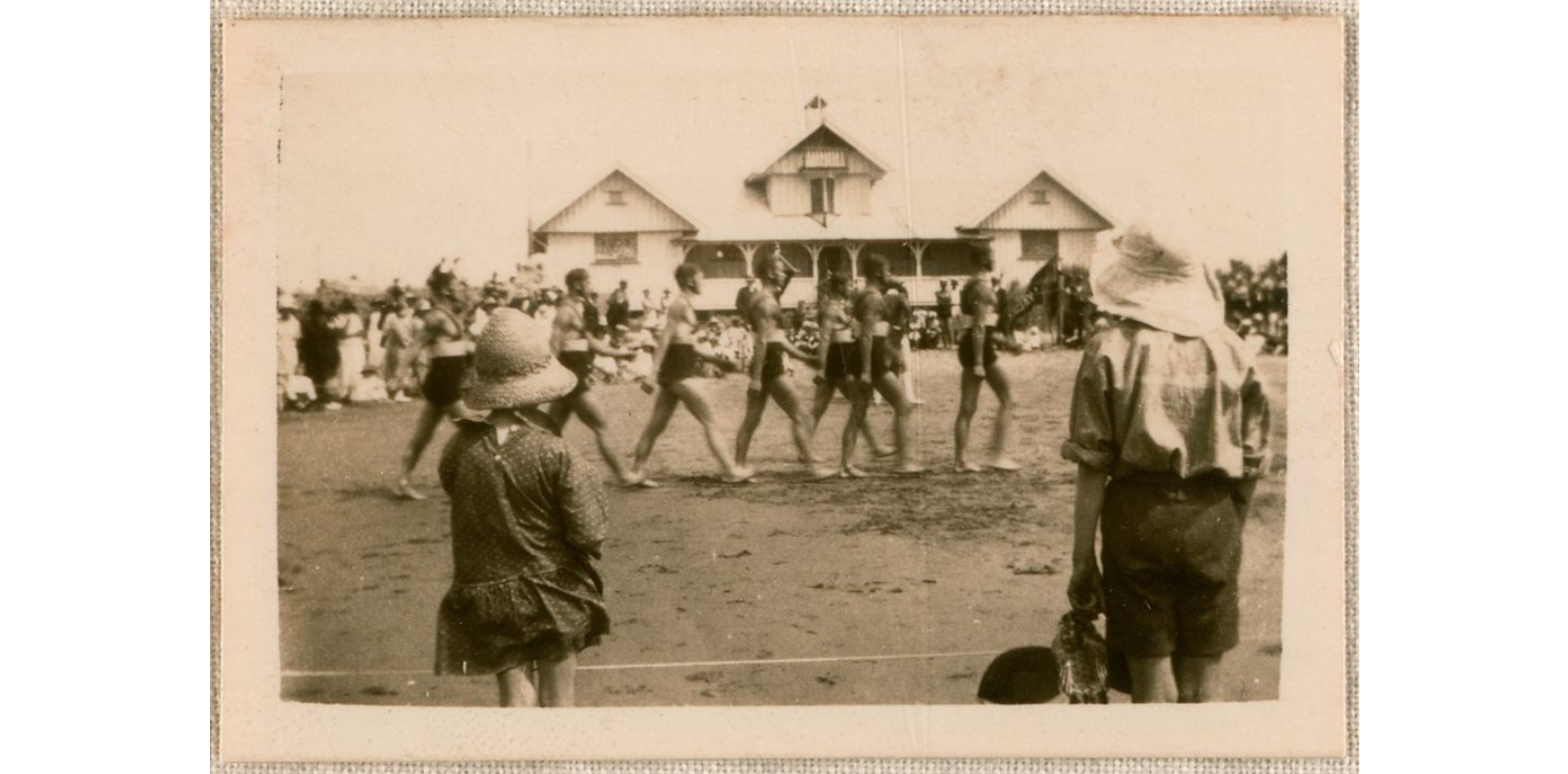
The New Brighton Surf Life Saving Club, the first of it's kind in New Zealand in 1920 overseeing an event.
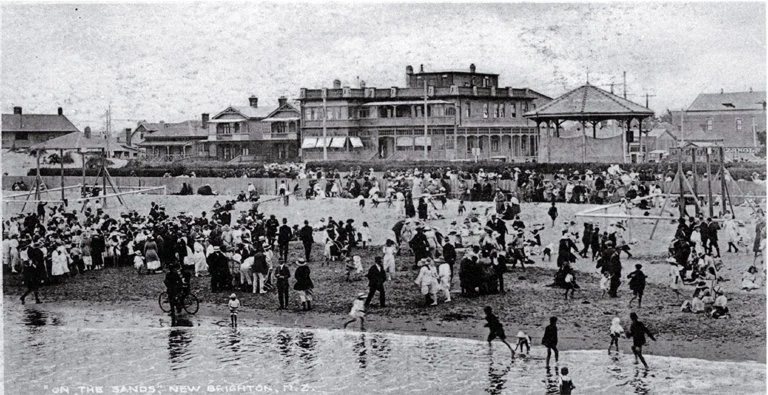
A busy beach day in 1920
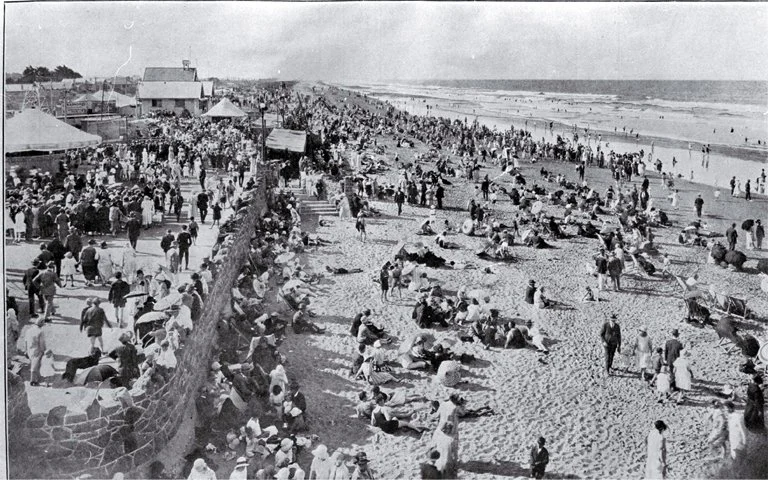
New Brighton Beach in 1927 continuing to show it's special ability to draw in crowds.
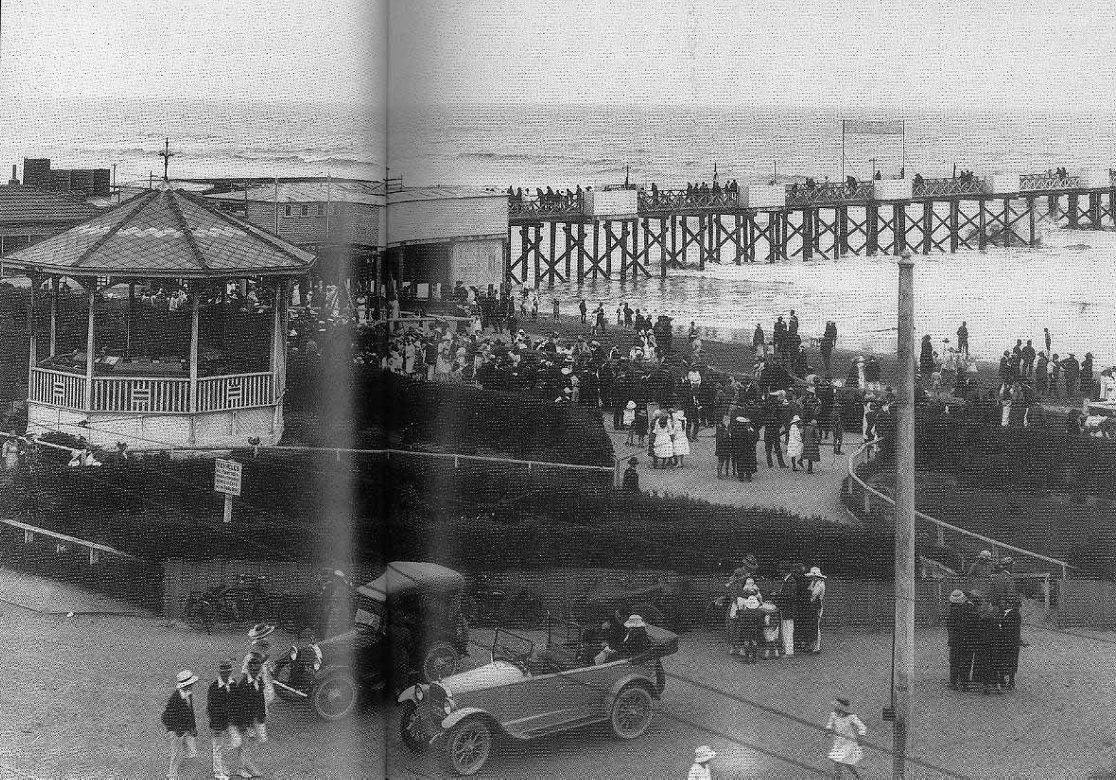
The foreshore in 1930's
Back To Roots
1946 - 1980
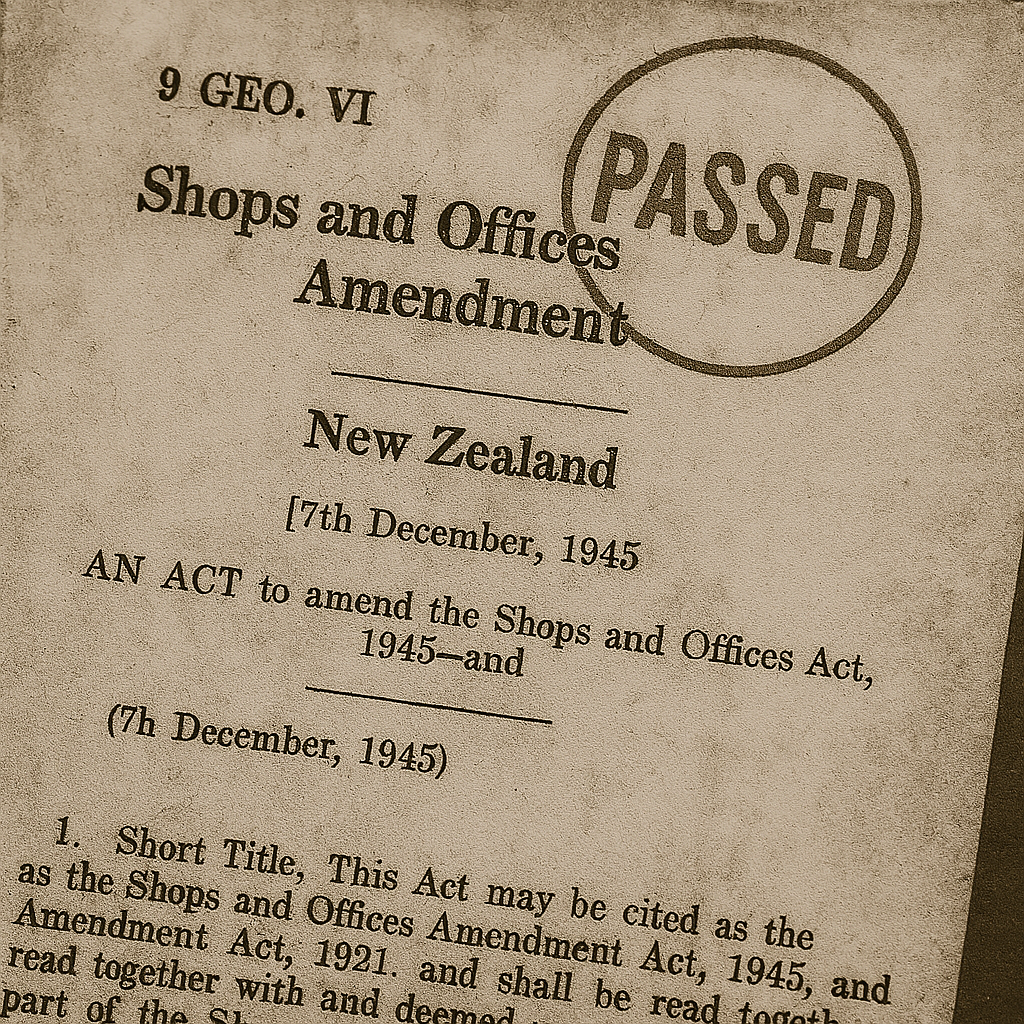
In 1945, New Zealand passed a law driven by strong union pressure and post-war social reform to revolutionise work-life balance. With Sunday already off-limits for trading, the Shops and Offices Amendment Act 1945 closed shops on Saturday too, creating a two-day weekend for family time and rest.
The unintended consequence was immediate: Saturday — the most convenient day for shopping — was gone, and with it most weekend retail activity. But New Brighton’s business association saw a loophole. They lobbied hard for an exemption and won. From the first week of 1946, and for the next 34 years, New Brighton became the only place in New Zealand legally open for business on a Saturday.
A modest coastal centre built for locals and visiting holidaymakers suddenly found itself funnelling an entire region’s Saturday demand for groceries, clothing, and leisure through a few blocks of shops. Overnight, New Brighton became the envy of every retailer in Christchurch. Businesses scrambled to secure space, and developers bought up land, demolishing houses and baches to make way for carparks, arcades, and department stores.
It exploded into the city’s largest shopping precinct — but it wasn’t planned. It was a retail gold rush. No cohesive design, no central vision — just every operator for themselves. The mix shifted from general goods and seaside attractions to an all-encompassing commercial hub with every major chain, brand, and specialist retailer crammed in. Recreation and leisure, once the heart of New Brighton, were pushed aside. In 1965, the privately built pier was demolished rather than repaired, council funds focused on supporting the retail boom. The Lido Cinema — one of the last great leisure icons — was knocked down in 1977 to make way for yet more shops.
By 1980, the transformation was complete. The seaside playground of old was now an unrecognisable retail mecca — fragmented, uncoordinated, and riddled with design flaws. But the monopoly masked every weakness.
Then, in 1980, Prime Minister Robert Muldoon introduced nationwide Saturday trading. Overnight, New Brighton’s exclusive advantage vanished. What had been a necessary and exciting trip became, for most of the city, an unnecessary detour. The golden age was over — and the next era had begun.
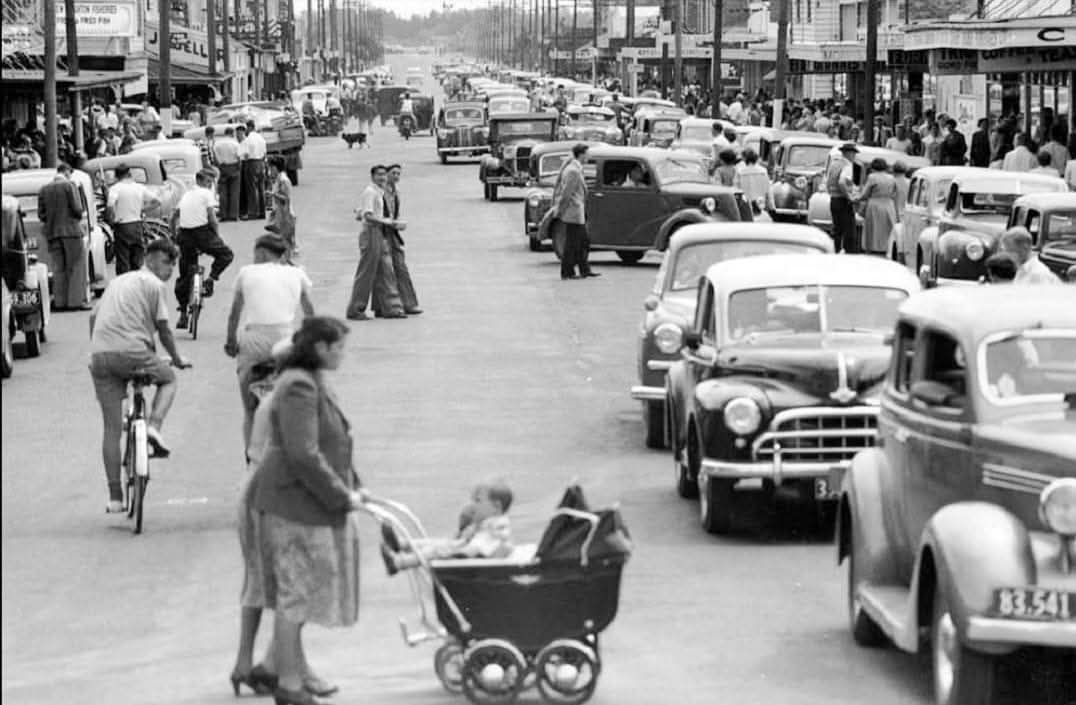
Main Street 1952 - Just a typical Saturday in New Brighton.
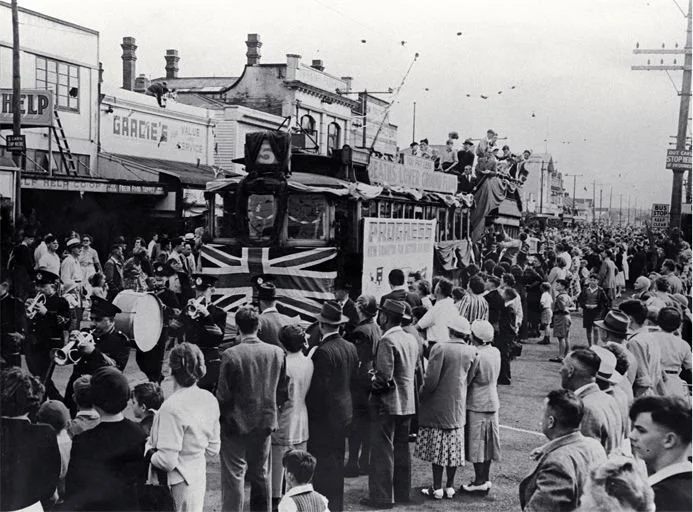
The last tram to New Brighton, as tram services were being discontinued across Christchurch.
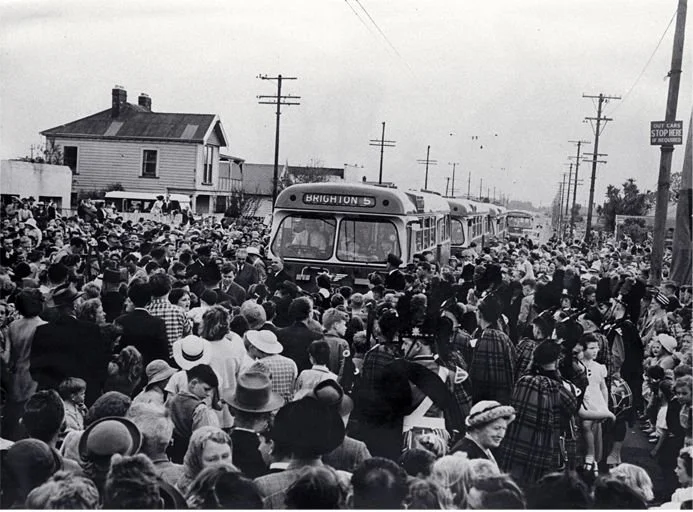
Following closure of the Trams, the first buses start coming to New Brighton making it easier to get there.
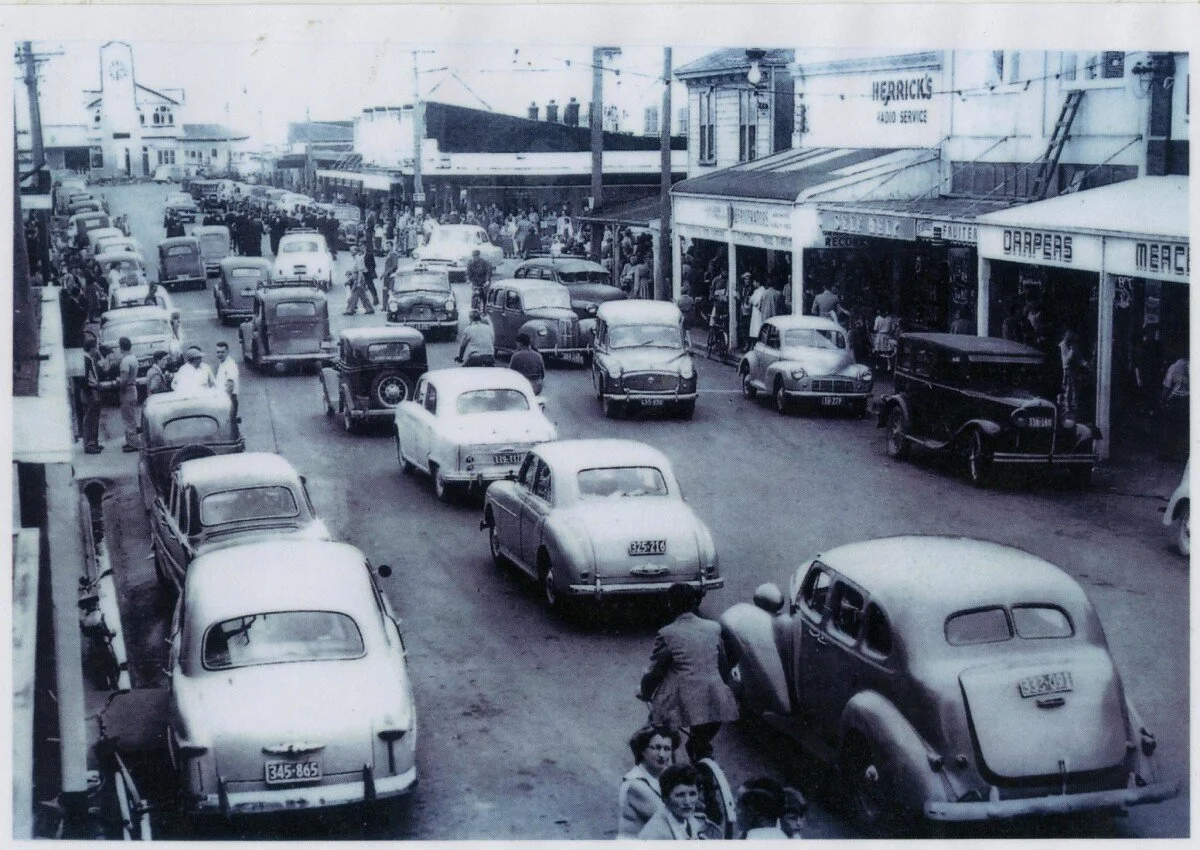
Main Street 1952
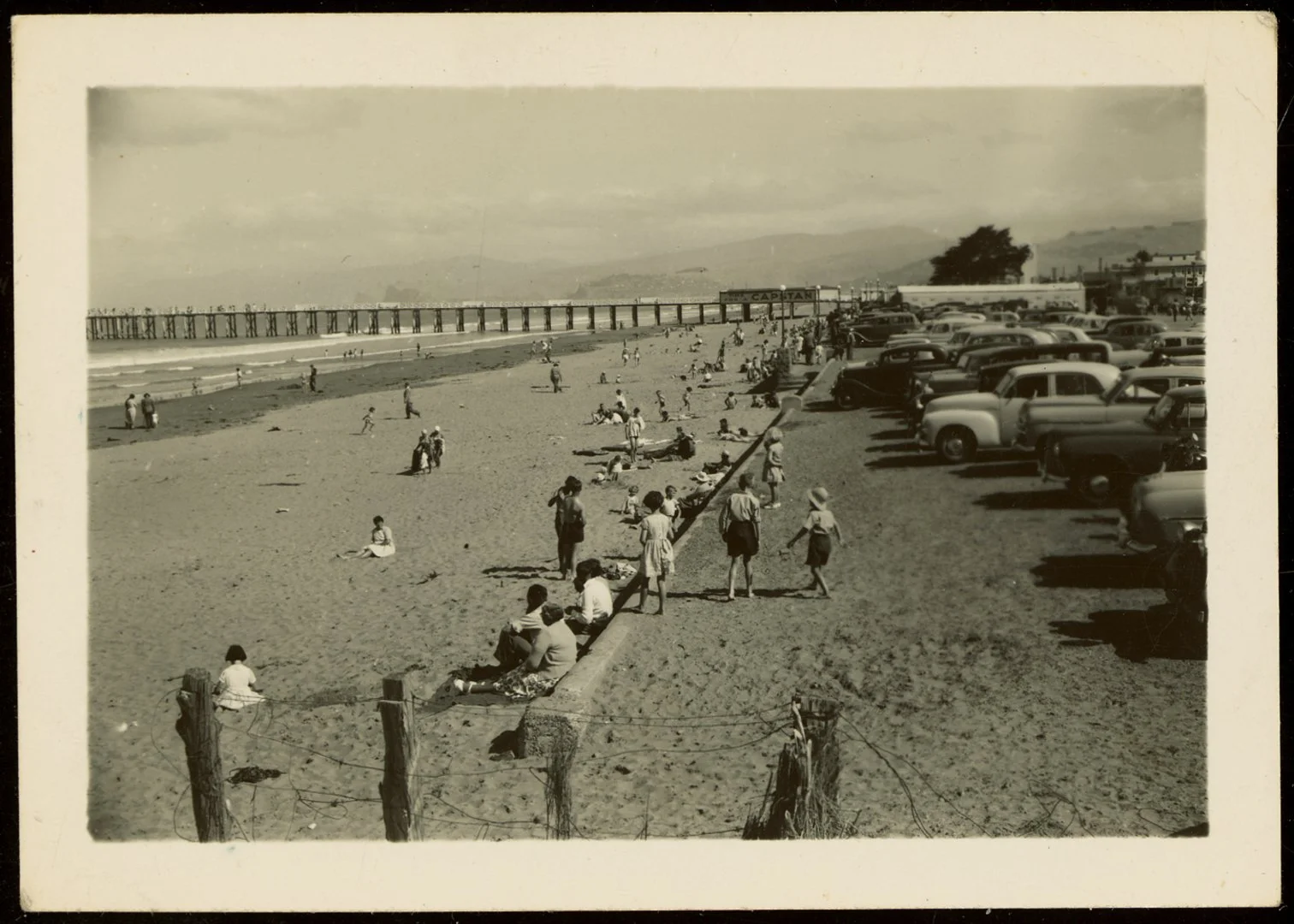
Standard beach day in the 1950's
Main Street 1955
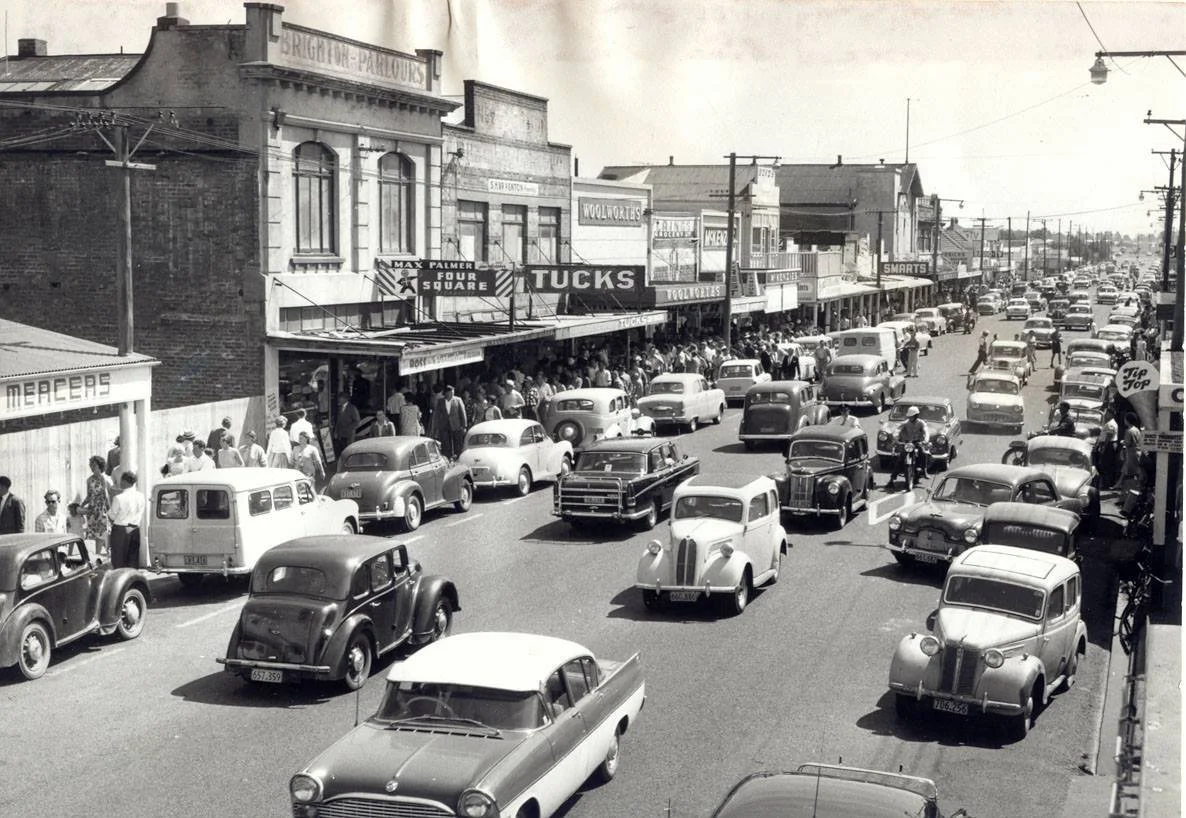
Main Street 1961
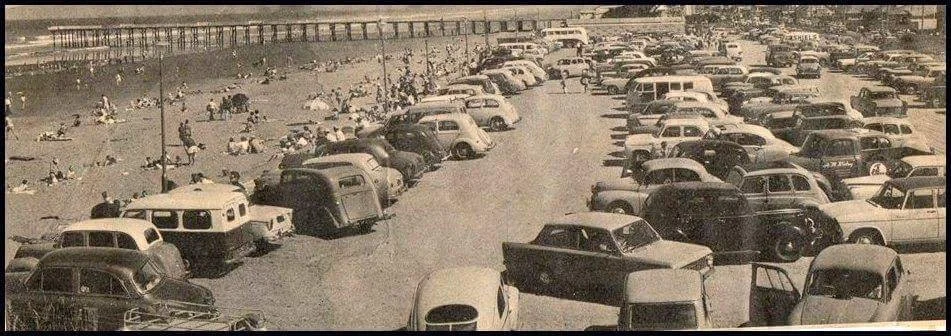
A hot day at the beach in the 1960's
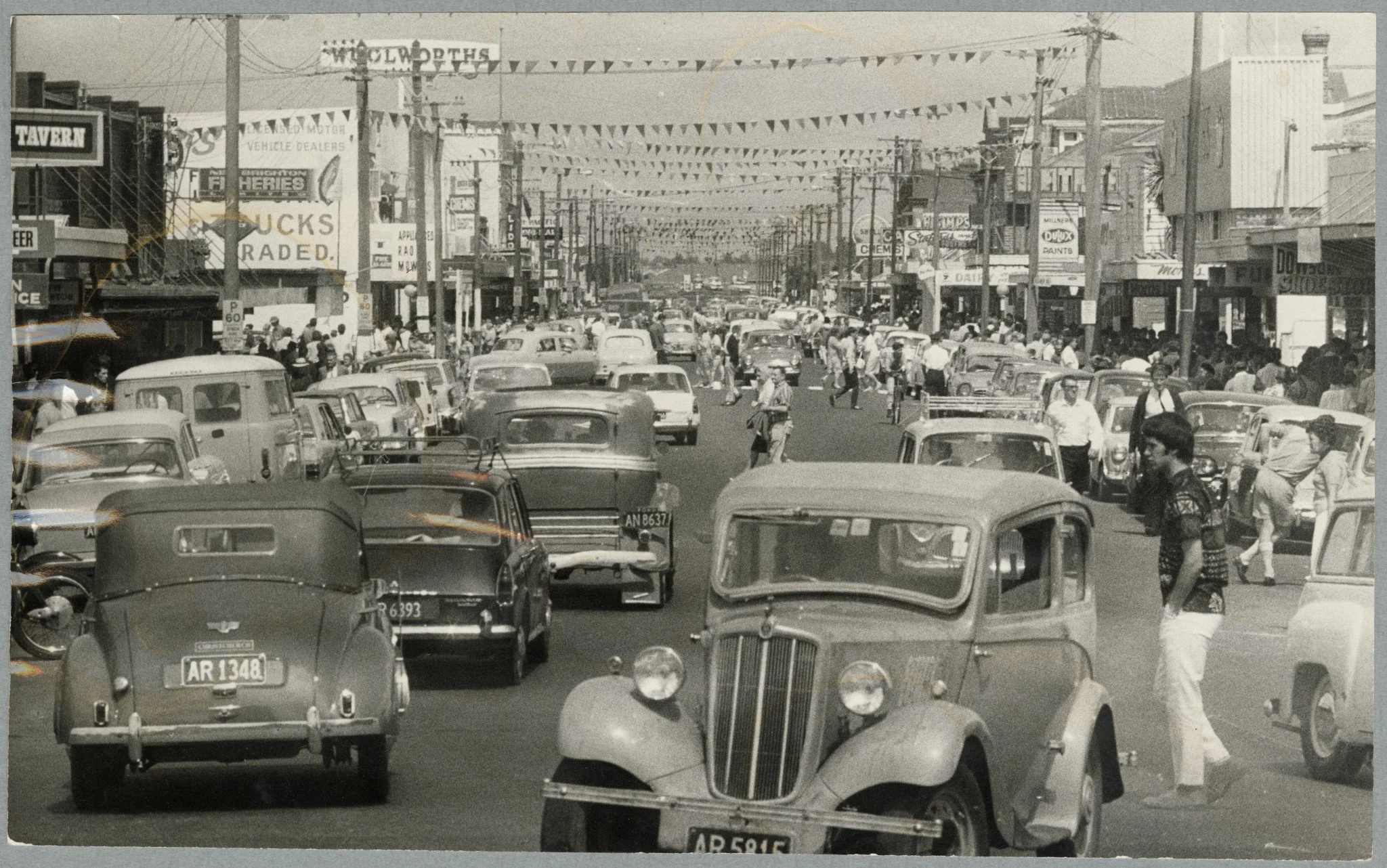
Main Street 1967
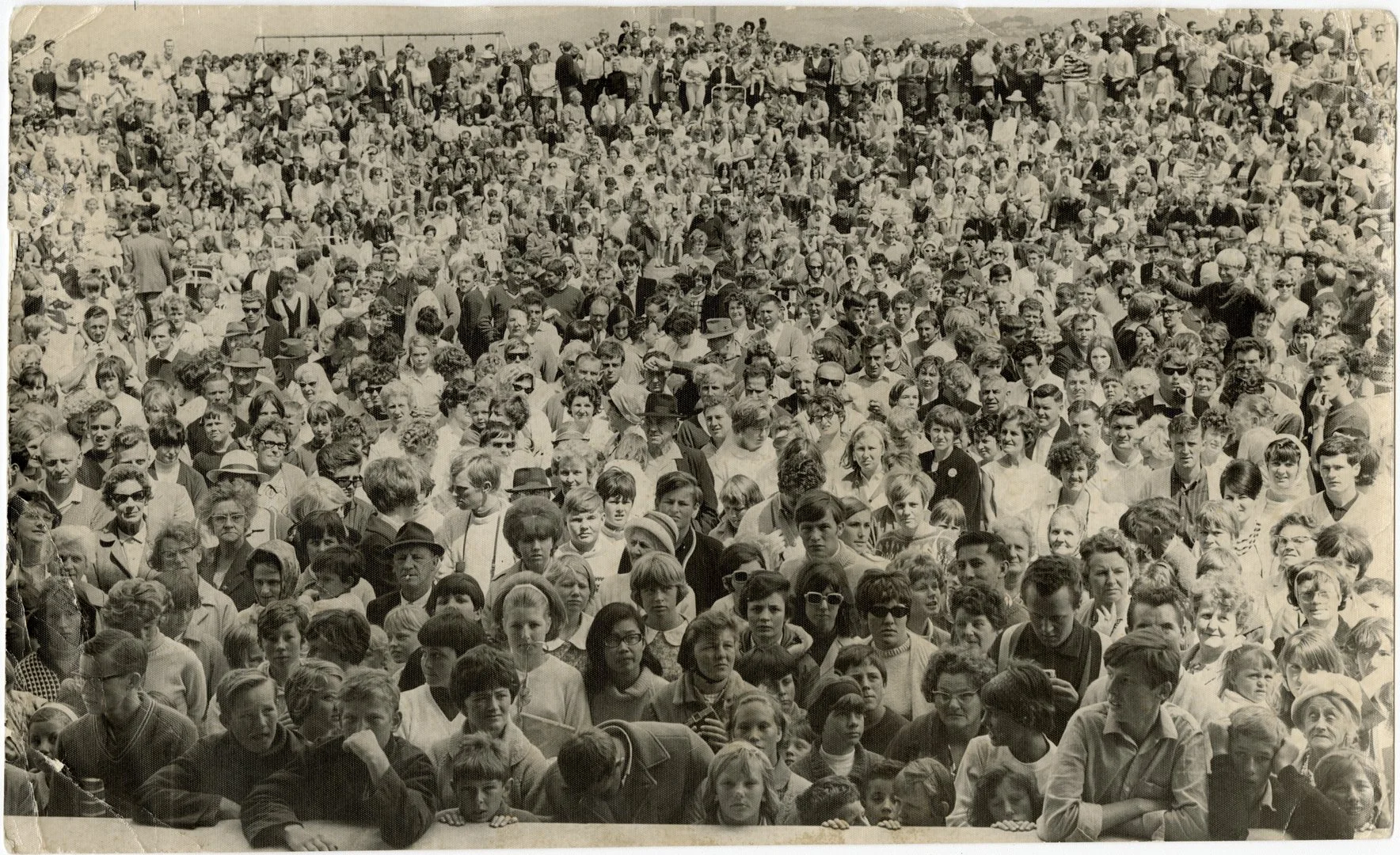
Event's in New Brighton carried through. A crowd watching Miss New Brighton at the New Year Carnival 1968.
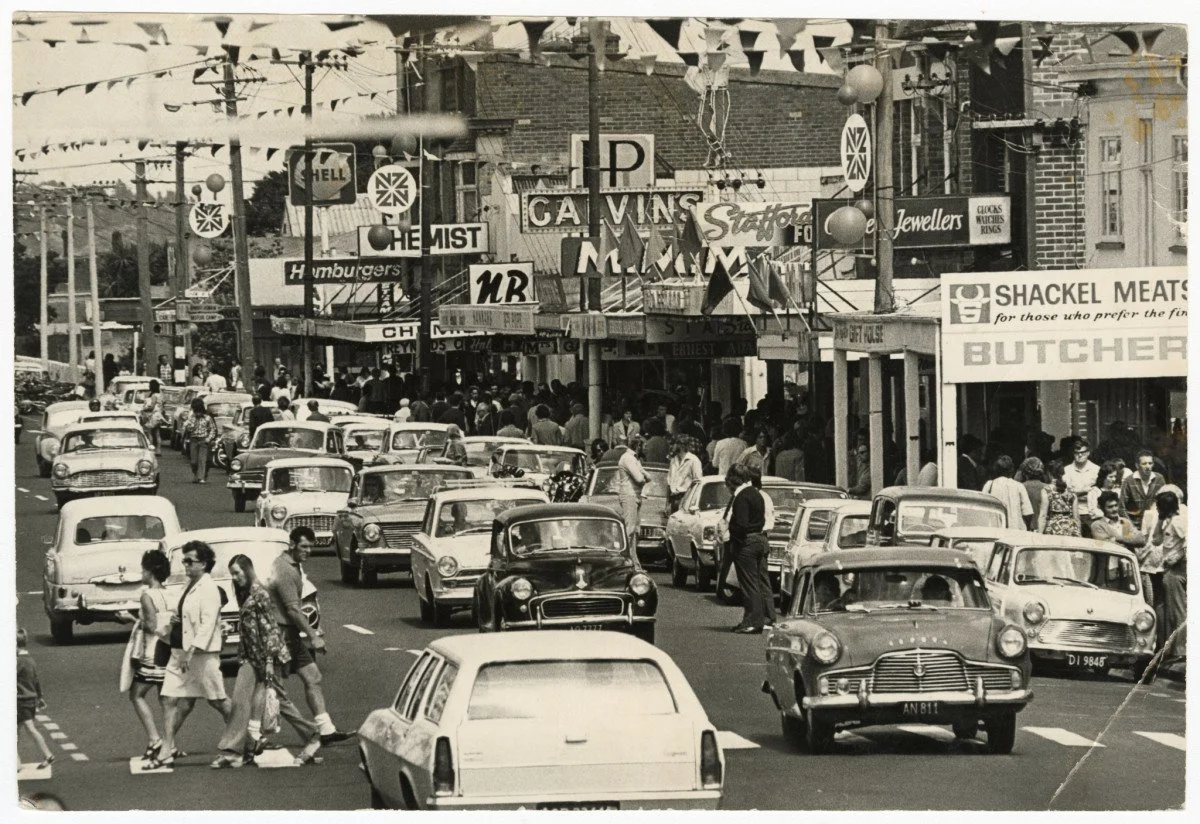
Main Street 1973
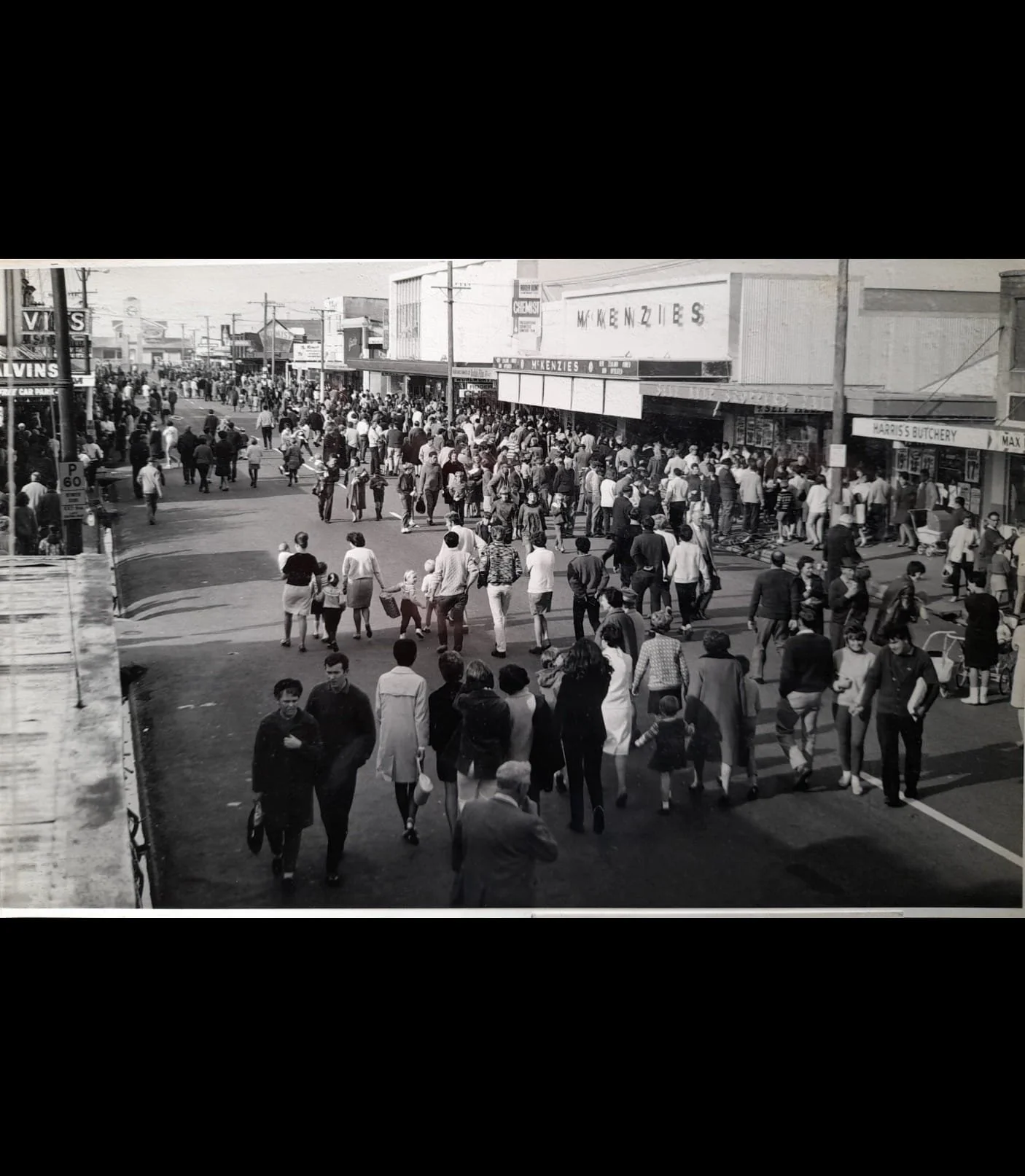
Main Street 1970s
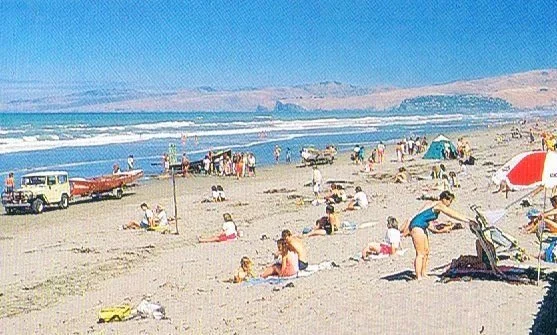
Brighton Beach 1973
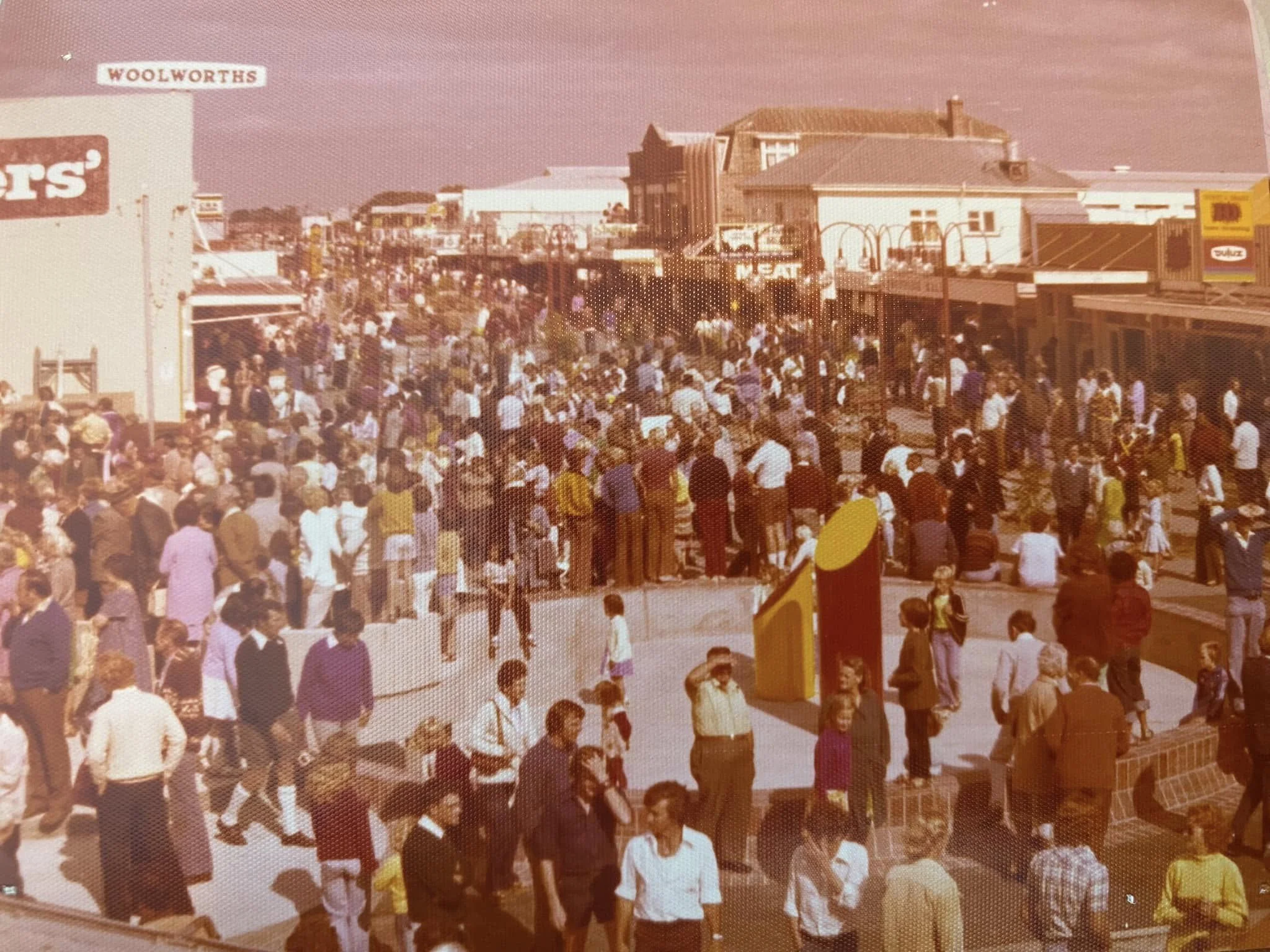
Main Street 1977 now fully pedestrianised
Back To Roots
1980-2011
On the 15th of November 1980, the country re-opened on Saturdays.
In anticipation, retailers across New Zealand planned grand re-openings and “welcome back” promotions. It was a huge occasion, and something few people under the age of 50 would remember — weekend shopping.
In Christchurch, it wasn’t new, just different. New Brighton had been part of life for decades — fun, with everything in one spot, worth the trip. It wasn’t a ghost town that first Saturday, but something had changed.
The first casualties were the essential-needs stores. During the monopoly, the whole city needed to come if they couldn’t shop during the week. Now, if you didn’t live close, there were much more convenient options, instantly reducing the incidental spending this foot traffic brought.
Neighbourhood centres began expanding to recapture this returning trade, and their success fuelled further growth. Alongside large enclosed malls, they delivered shopping that was planned, coordinated, and built around convenience — all under one roof.
By contrast, New Brighton was on the city’s fringe, spread across hundreds of individually owned buildings in an outdoor setting. It took longer to get to, parking was difficult, and the experience was fragmented. For 95% of the population, there was at least one major mall closer, and those malls kept getting better as New Brighton continued to get worse.
As malls expanded, they captured more of the foot traffic that once went to New Brighton. With fewer customers, quality businesses left, replaced by lower-spend categories, discount outlets, and second-hand goods. Low rents meant owners often stopped reinvesting, further lowering the appeal. This created a self-reinforcing downward spiral: as malls improved, New Brighton declined, which only pushed more customers toward the malls.
The beach still drew people from across the city, and locals still needed essentials, but the commercial centre no longer served either group well. Visitors found little to add to their day, and locals increasingly drove elsewhere for even basic needs.
As indoor malls grew, shoppers preferred the climate-controlled comfort of being out of the weather. On New Brighton’s flat coastline, the prevailing easterly wind became part of the decline narrative — a convenient explanation for why other centres outcompeted it. While it certainly made shopping less pleasant than indoors, it was no worse than Cashel Mall on a windy day, and the real problems were man-made.
Over time, Christchurch’s “go-to” beach quietly shifted from New Brighton to Sumner. A marginal difference in wind exposure compounded into the gap between an upper-market beach village and a derelict one just 10 km apart — a modern idea born from the need to explain such a steep fall from grace. Sumner’s smaller scale, boutique feel, and consistent cluster of cafes and shops kept it appealing. It never tried to be a mall — just a small block of shops with a mix of essentials and indulgences for locals and visitors. While New Brighton’s commercial centre fractured, Sumner continued to offer what New Brighton’s early era had excelled at: a compact, walkable village serving both locals and day-trippers. It didn’t match New Brighton’s former bold scale and energy, had fewer residents, and was harder to get to, but it provided a reliable experience that steadily drew more beachgoers.
The demand for shops still existed in New Brighton — in fact, the economic opportunity was significant — but it was squandered by poor experiences for locals and a lack of compelling reasons for visitors to linger. Attempts to restore its strengths failed because they required coordination between hundreds of separate building, land, and business owners. One holdout could block a plan. Ambition, self-interest, and mistrust led to stalemate, with everyone waiting for a better deal while the collective opportunity slipped away.
One notable exception was the rebuilding of the Pier in the late 1990s. As a council-led project, it bypassed the private-owner deadlock and brought life back to the beachfront. It became the most photographed landmark in Christchurch, but on its own, it was not enough to reverse the commercial centre’s decline.
By 2011, New Brighton was a shadow of its former self — no longer a thriving seaside village, nor a retail mecca. The shopping era had twisted the centre so far from what it once was that finding its way back seemed nearly impossible.
In February 2011, Christchurch was shaken by the earthquake — and for New Brighton, it was the start of yet another era.
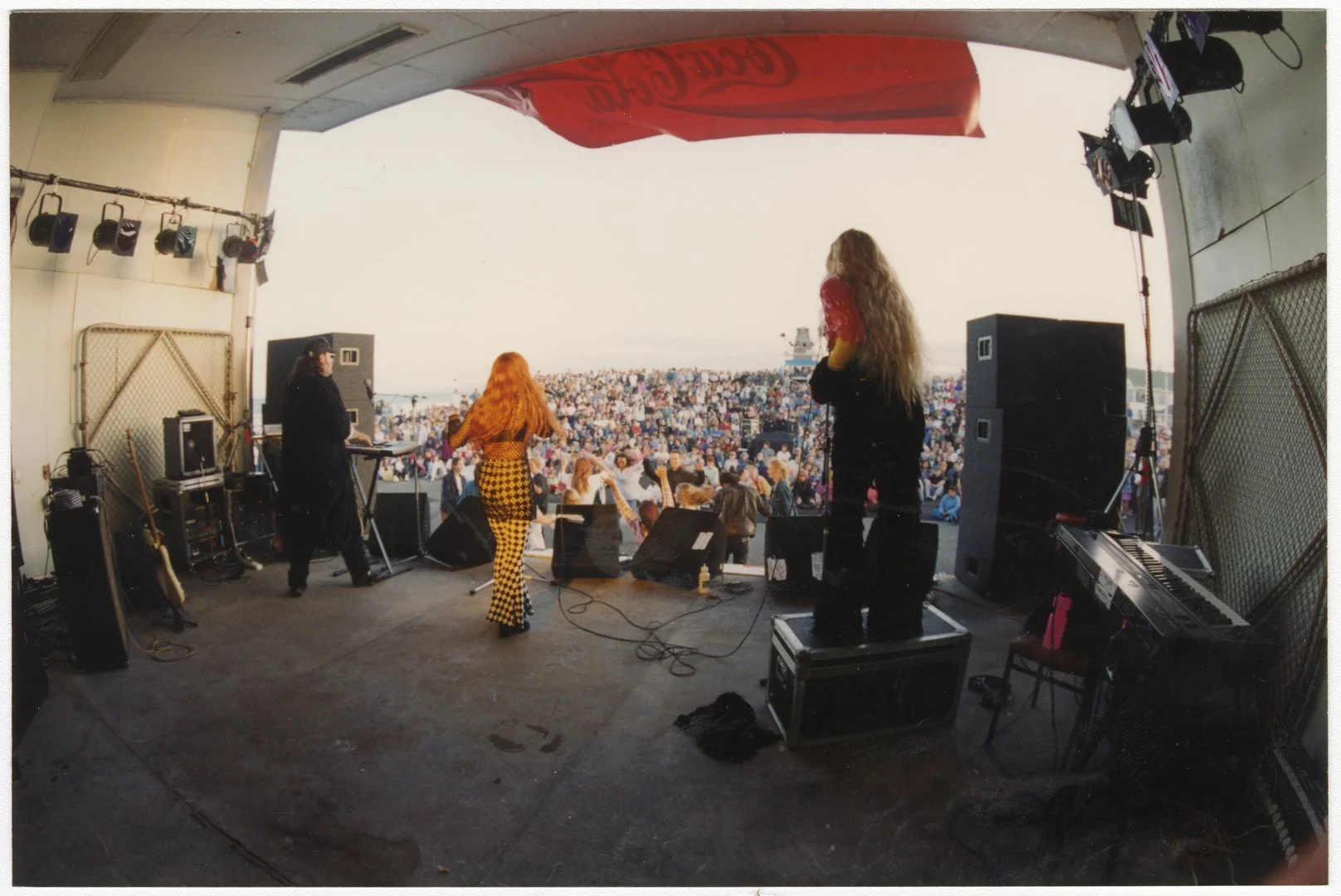
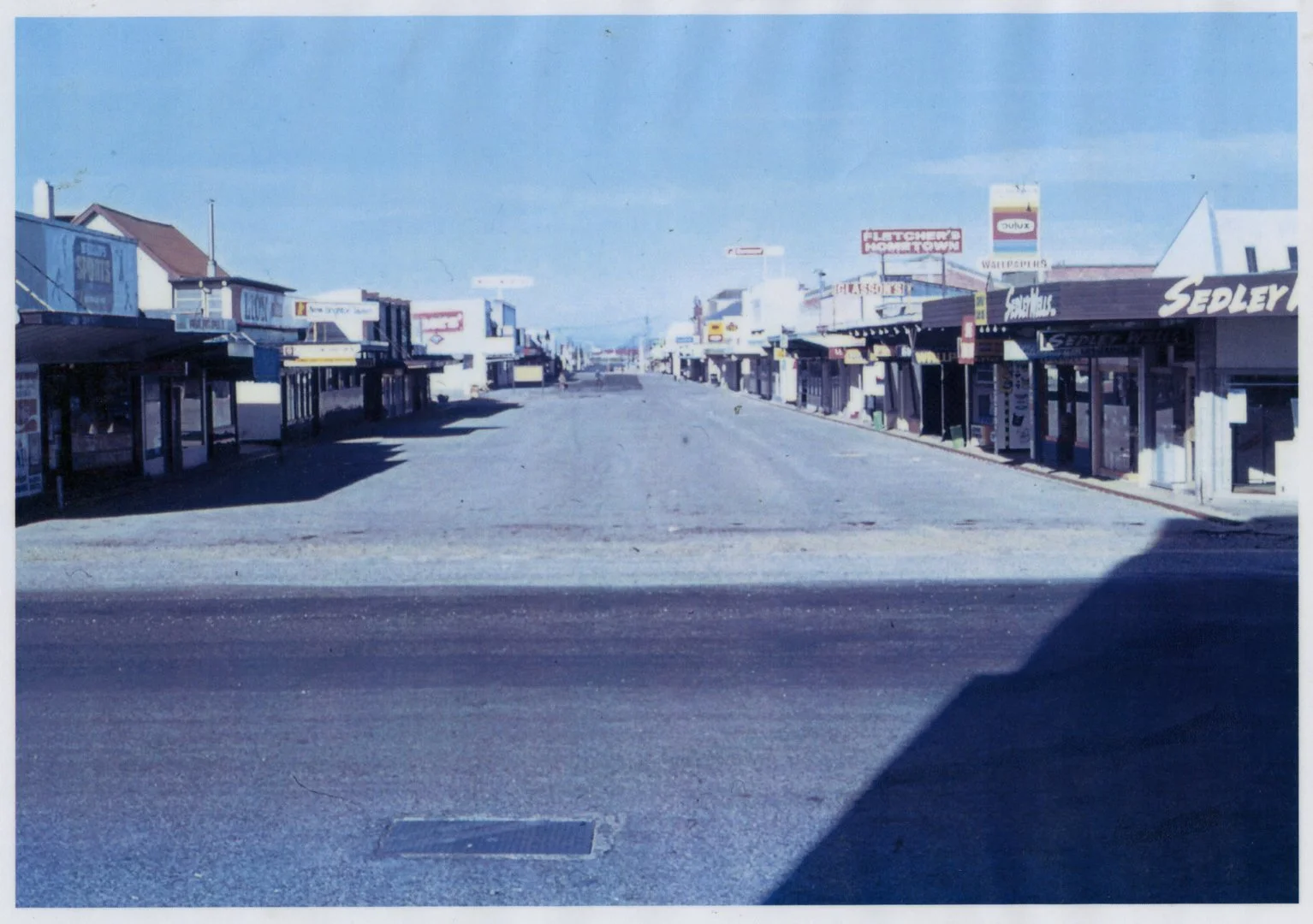
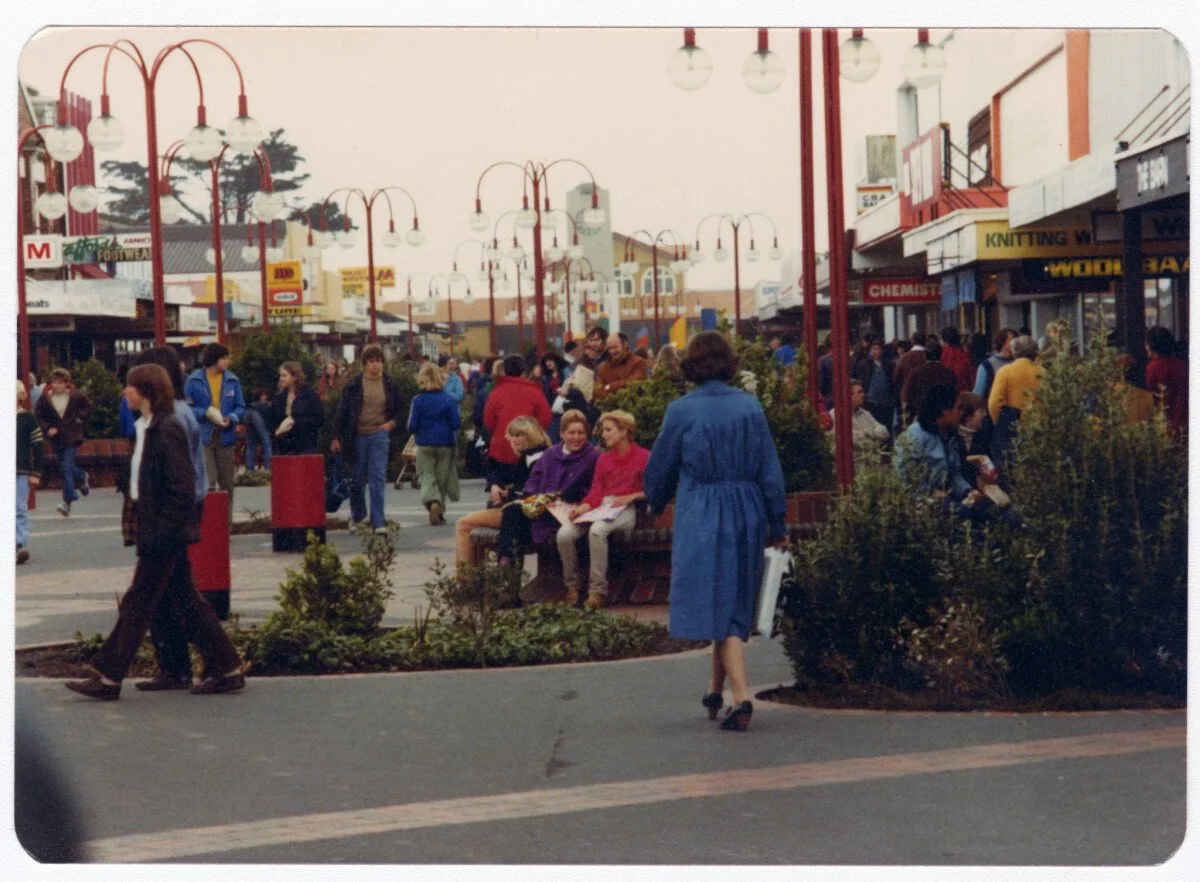
“Looking down Seaview Road, New Brighton” by Antonius (Tony) de Vries, 1980s. Licensed under CC BY-NC-ND 3.0 NZ. Source: Christchurch City Libraries – Canterbury Stories.
Back To Roots
2011-2025
The Christchurch earthquakes in 2011 were a tragedy — lives lost, homes destroyed, and communities shaken. For New Brighton’s residents, the pain was real and lasting. But for the commercial centre, the quakes became an unlikely catalyst. Decades of ownership deadlock had kept any meaningful change from taking root. The earthquakes disrupted that status quo: some buildings became unviable, long-term owners sold, and fresh opportunities emerged.
Unlike the CBD, New Brighton wasn’t given the compulsory acquisition powers that might have accelerated transformation — politics between council and central government saw to that — but the disruption still opened cracks for progress. Over the following decade, momentum grew in unexpected ways.
The foreshore playground opened and instantly became one of Christchurch’s most popular family attractions, at times drawing over 1,000 people a day. The He Puna Taimoana hot pools — built at a reduced scale due to scepticism about investing in New Brighton — shattered expectations, winning national awards and pulling strong visitor numbers year-round, far beyond initial projections.
During the Saturday trading monopoly, investment naturally flowed into retail — and under those unique conditions, it thrived. But when the monopoly ended, retail’s decline in the decades that followed became the suburb’s defining story, erasing the memory of what had made it great in the first place and convincing many there was something inherently wrong with New Brighton.
Now, the suburb is returning to its roots — pairing the beach with destination experiences. The playground and hot pools echo the seaside playgrounds and Howie’s hot salt baths of over 120 years ago. And just as it did then, the formula worked: immediate, undeniable success.
While housing development surged across New Zealand in the early 2020s, most developers still steered clear of New Brighton. The perceived failure of its retail sector had bled into perceptions of residential property, fuelling a stigma that buyers simply wouldn’t want to live here.
Then, just like the hot pools, the first real test shattered that belief. In 2022, the first large-scale modern townhouse development hit the market — and every unit sold in under 24 hours, breaking the developer’s company record. Turns out, an affordable new home with an ocean view and the beach just 20 metres away is a pretty easy sell, just as it was from Christchurch was settled.
From there, momentum snowballed. Over 400 attached homes have since been built, consented, or planned across New Brighton and North Beach. Between 2020 and 2024, property values surged by around 60%, outpacing Christchurch and the national average, making New Brighton one of the city’s fastest-rising suburbs. Marine Parade is now transforming — lined with new townhouses from entry-level to luxury, and brand-new million-dollar homes replacing old beach cottages.
In 2022, a major site in the heart of New Brighton’s commercial centre hit the market. The Pierside project was born. Within two years, four more adjoining sites were secured, consolidating both sides of the pedestrian mall and the Marine Parade frontage — the original heart of the town.
For the first time in nearly half a century, the long-standing problem of fragmented ownership — the lingering hangover from a bizarre experiment that turned one of Christchurch’s most prized destinations into a ghost town — was solved. Under one umbrella, the heart of New Brighton can not only return to its former glory, but exceed it in ways only a coordinated, master-planned redevelopment can deliver.
Back To Roots
2025 And Beyond
New Brighton’s future is bright.
Rolling out over the next few years, Pirside is establishing a new town centre and seaside destination to bring the foreshore to back to life.
Pierside’s development has brought forward further public realm investment that has been on pause until private development began including a fully refreshed and redesigned pedestrian mall looking to start in 2026.
The Avon River Green Spine and City‑to‑Sea Pathway are transforming Christchurch’s red zone into the city’s largest park ever — over three times the size of Hagley Park — and one of New Zealand’s most ambitious ecological projects.
This visionary green corridor is already taking shape with new pedestrian and cycle bridges already in place and sections of the 11‑km pathway under construction due to be finished ending in New Brighton in 2026.
Once finished, the City-to-Sea Path will be Christchurch’s most-used recreational route, delivering a seamless, accessible connection from the CBD to New Brighton and a constant funnel of walkers and cyclists reaching Pierside as the end point.
The “Gateway to New Brighton” project upgrades the bridge and surrounding area into New Brighton. An $80m project including a number of roading changes to increase traffic capacity, cycle way additions and a new beautified grand entrance to the suburb.
New Brighton’s history has been a bizarre tale of booms and busts, bold experiments and costly mistakes. From it’s golden era as Canterbury’s playground, to the decades long retail monopoly that distorted its economy, to the slow decline that followed when that monopoly ended. Each chapter has left it’s mark on the suburbs reputation, shaping how outsiders have seen it, and how locals have fought for it.
Now the script is being re-written again. new Brighton is positioned not just to recover it’s crown, but to wear it more boldly than ever.